Showing posts with label French books. Show all posts

Thursday, 31 May 2012

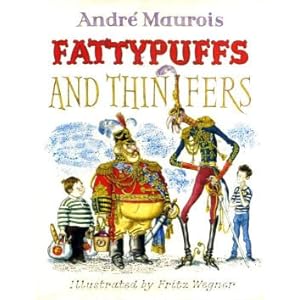
Fattypuffs and Thinifers!

I made it! It's May 31st, the end of the Blogathon. I've learnt a lot, discovered some lovely new blogs to follow and had fun along the way. I hope you've also enjoyed reading my children's books in translation series, and here's one more recommendation to round it off...


I was unexpectedly thrilled when browsing through the Outside In World website to rediscover Fattypuffs and Thinifers by André Maurois (French title: Patapoufs et Filifers). It's a story I read as a child, from the same rather battered copy that my Dad read in his childhood. Out of print for years, it was reissued in 2000 by Jane Nissen Books, translated by Norman Denny. It never occured to me that it was a translation then, but now it is clearly incredibly French!

It tells the story of two boys, one fat and one thin, who find their way into an underground world divided between two warring nations - the Fattypuffs and the Thinifers. Whether or not it is intended as an allegory of Franco-German relations, it has a lot to teach about tolerance, jingoism, stereotyping and the futility of war - written in 1930, it is clearly informed by the First World War.

Now I know it's still available, I really am going to have to track a copy down - I imagine the copy I remember is long lost, but I will enquire! An abiding childhood memory is of making Fattypuff and Thinifer footprints on the beach by walking on my heels and digging in the edge of a spade. (It was my Dad who started it, so maybe he did that as a child too...) And that's what a good book does - it sticks in your head, gets passed on and creates new worlds, new games.

Tuesday, 29 May 2012

Z is for Zou

Zou is a little zebra created by Michel Gay, a popular French author and illustrator. It's another cracking  picture book from Gecko Press, published in 2008.


In a situation parents and small children everywhere will recognise instantly, Zou would like a cuddle in Mummy and Daddy's bed. Unfortunately, Mummy and Daddy just won't wake up, and when they do, they're terribly grumpy. What can he do about this? Then he has an inspiration - coffee! They need lots of coffee...

It's a sweet story, beautifully illustrated (and fortunately it hasn't actually inspired the boys to try and operate the coffee machine or kettle!). Sadly, the translator doesn't seem to be named, but Zou and the Box of Kisses (Gecko Press, 2011) is translated by Linda Burgess. Both boys took to it at once, and it was lovely to hear fils aîné reading it to his little brother on a similar Saturday morning not so long ago.

"One cup for Mu-u-u-mmy... One cup for Da-a-a-ddy..."

It was also translated for Clarion Press in the US by Marie Mianowski under the title Zee in 2003, as was Zee is Not Scared (2004).

Here's hoping that Zou à vélo (L'Ecole des Loisirs, 2005) and Les Sous de Zou (L'Ecole des Loisirs, 2011) will also soon be available in English!

Saturday, 26 May 2012

X is for Saint-EXupéry

Yes, I know, but it was the best I could do. If you can think of a better topic for X, feel free to let me know in the comments!


Antoine Marie Jean-Baptiste Roger, comte de Saint Exupéry, to give him his full name, was a pioneering aviator as well as a writer and poet. After a career as a commercial pilot, helping to establish international airmail flights, he joined the French Air Force and later flew for the Free French Air Force despite being officially too old. His last mission was a reconnaissance flight in 1944, in the course of which he is assumed to have been shot down over the Mediterranean - he was never seen again.
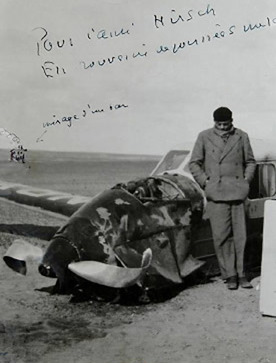
Sahara Crash -1935- copyright free in Egypt 3634 StEx 1 -cropped
Saint-Exupéry with the wreckage of his plane in the Sahara
He is best-known for The Little Prince (1943), partly inspired by his own experience of a plane crash in 1935. The Little Prince is one of the best-selling books ever written; it has been translated into over 250 languages and dialects and was voted the best book of the twentieth century in France.

So why am I finding it so hard to write about? Partly because it's almost impossible to summarise - an airman crashes in the Sahara Desert, where he meets a Little Prince, a visitor from Asteroid B-612. The Little Prince asks him to draw him a sheep, tells him about his planet and his travels, and they become friends. The airman manages to fix his plane and find water just in time, and the Little Prince leaves after being bitten by a snake. It doesn't sound like much, and completely fails to do the book justice. It's one of those books like Jonathan Livingstone Seagull or The Alchemist that are as much about philosophy as anything else, and which many people find life-affirming, life-changing or whatever, and other people loathe with an equal passion... Added to that, there is the question of whether or not it's even a children's book in the first place. The author says that it is in his dedication, but plenty of people dispute that.

I had a copy as a child, but never read it - what happened to it eventually, I don't know. I later read it in French and completely failed to see what all the fuss was about.

Then, as it happens, two new translations were issued in 2010 - Sarah Ardizzone's translation of Joann Sfar's 2008 graphic novel, published by Walker Books, and Ros and Chloe Schwartz's translation for the Collector's Library. (Oddly, the book jacket spells their surname Schwarz...) The translators of these two versions held gave numerous interviews and discussions about their differing approaches, the challenges of translating such an iconic text and various other related matters, several of which I read. (Here is a clip of Ardizzone and Ros Schwartz on the BBC Radio 4 Today programme.) So, I decided to read both and see if they helped me understand the book better.

The Little Prince, Collector's Library, tr. Ros & Chloe SchwartzThe Little Prince, graphic novel by Joann Sfar, tr. Sarah Ardizzone


I think it's fair to say that they did. And for me, that highlights the importance of translation - even as a translator from French myself, I needed to read this book in my own language to get to grips with what it's all about. And no, I'm not going to try and explain the message - read it for yourself, if you haven't already!

I found the Sfar/Ardizzone version particularly helpful (in which I seem not to be alone - see also here: http://www.graphicnovelreporter.com/content/little-prince-review) as the comic strip format spells out various ambiguities, as well as fleshing out the character of the aviator. Those huge eyes are rather freaky but, like a puppy, they give the Prince a very vulnerable, appealing air.

Both versions concentrate on the sound of the text - the French is very simple and risks sounding clunky in English, so the reason Ros Schwartz worked with her daughter Chloe, was to gain the benefit her musician's ear listening out for duff notes. I particularly like the way they condense un boa ouvert et un boa fermé - "an open boa and a closed boa" - into "elephants inside boa constrictors" or "my two boa constrictors". As all the text in the graphic version is dialogue, Ardizzone had to pay particular attention to making this sound natural. Her "I wish he'd stop bleating on about his sheep!" is particularly inspired.

It's very hard to translate such a well-loved text and, in short, I think both versions have pulled off a great acchievement. I hope that they will be properly appreciated!

Friday, 11 May 2012

J is for Joëlle Jolivet and Jean-Luc Fromental...

... both French, he is a highly successful journalist, travel writer and author of novels, children's books and comics; she is an acclaimed designer and illustrator. They have collaborated on several books, including 365 Penguins. Sadly, the translator is uncredited, but the (American) English version was published by Abrams in 2006.
365 Penguins

In it, a family receive an unexpected parcel on New Year's Day. It contains a penguin and an anonymous note:
"I'm number 1. Feed me when I'm hungry."
The penguins keep coming; they're cute at first but soon start to cause problems. How do you house them, feed them, clean them? And who's sending them? And why?! Along the way, the family find themselves solving various mathematical problems in attempt to calculate their food requirements and storage solutions. By 31 December, their house is full of, you've guessed it, 365 penguins! One of them, named Chilly, has cute little blue feet. While they hold their New Year's Eve party on the lawn the sender of the penguins turns up.

It's Uncle Victor, the ecologist. He's been so worried about the penguins losing their habitat that he decided to resettle them at the North Pole instead. As you can't just export theatened species, he's been sending them one at a time. Now he takes them off in his van, leaving just Chilly as a pet. Things get back to normal until one day a new parcel arrives...

Now, this is an odd one. I want to like it - it's about penguins, and it sneakily teaches kids maths and a lesson about global warming. The illustrations are fun and very expressive. But, but, but, the whole thing sets my inner pedant screaming! What kind of ecologist would come up with such a harebrained and irresponsible plan? Given that the world is heating up, why would the penguins do any better at the North Pole anyway? And that's without even considering the cruelty of sending an animal by post! (Yes, I know. But this stuff bothers me. See this old post here: On Thomas, the Little Red Train etc.)

And another thing, the actual book is enormous. It doesn't fit in the bookcase and it's very hard to hold with a wriggling child on your lap.

On the other hand, the boys love it. Spotting Chilly with his blue feet is an extra game and of course they don't care in the least about the implausibility of it. Hopefully they will also pick up some of the mathsy stuff along the way.

Jolivet and Fromental seem to have made quite an industry out of penguins now and the pop-up book 10 Little Penguins looks charming too. Some pictures of the inside of the German edition can be seen here: fine fine books.

10 Little Penguins

Saturday, 5 May 2012

D is for Duquennoy

Ghost Party by Jacques Duquennoy
Jacques Duquennoy is an author I'd never heard of until recently, but then fils aîné brought Ghost Party home from school and it became a major part of our lives. Translated from the French by Antonia Parkin and published by Frances Lincoln Children's Books in 2004, it stars a ghost named Henry who invites his ghostly friends round to the castle for a dinner party. With each course, the guests turn the colour of the food or drink they're consuming, until the final flourish - dessert so light it melts in the mouth, making Henry and his friends vanish altogether. That's pretty much it for the plot, but the boys love it! In fact fils aîné (aged 5) says it's his "best book ever". I've just checked with him about what he likes best and he says "when they change colour and when they go invisible". Fils cadet (aged 2) says his favourite part is when Henry says "Boo!"

As this demonstrates, the illustrations are simple but fun, and Henry gets up to all kinds of tricks. Since we first made Henry's acquaintance, he has reappeared in the book bag several times and also been borrowed from the library.

There seems also to be an older, out of print, translation called Phantom Feast, published by Orchard Books in 1994, translator unknown. And, in the course of researching this post, I discovered to my joy that there are other books in the series to look out for... Loch Ness Ghosts and The Ghosts in the Cellar. Mind you, I won't be paying £128.92 for that last one, even if it is a first edition!

We managed to borrow Loch Ness Ghosts (Frances Lincoln, 2005, tr. Antonia Parkin) from the library today and fils aîné reports that he maybe even likes it a little bit better than Ghost Party, which is saying something!

Henry reads in the newspaper that the Loch Ness Monster has been spotted again so he sets off with three friends to try and find it. Obviously, a bagpipe playing Scottish ghost by the name of MacShortbread lives in the castle on the loch and he helps them in their search. Now, in the best traditions of farce, Nessie appears behind the ghosts every time they turn away - the boys find this hysterical and scream "it's the monster!" They go home disappointed, but when they get their photos developed (yes, the French edition predates digital cameras!), there's a surprise in store...

Loch Ness Ghosts


Friday, 4 May 2012

C is for...

Cinderella - Anne Anderson
'Cinderella' by Anne Anderson (1874-1930)
... Cinderella, source of one of the most famous translation myths in the world. It's widely believed that the glass slippers are the result of pantoufle de vair (fur slipper) being mistaken for pantoufle de verre (glass slipper) when Charles Perrault's French version of the tale was translated into English. I couldn't remember where I first read a debunking of this idea, but it seems quite likely that it was on fellow translator Jill Sommer's blog: Were Cinderellas Glass Slippers a Mistranslation? quoting snopes.com. Certainly fur slippers sound more comfortable than glass ones, but somewhat out of place at a royal ball!


I was also surprised to read the Grimm brothers' version of the story in which the fine clothes and slippers first "embroidered with silk and silver" and then "of pure gold" are thrown down - on three occasions - from a hazel tree over her mother's grave by a white bird who grants her wishes - no fairy godmothers, pumpkin coaches or enchanted footmen in sight. I wonder why Perrault's telling has stuck in this country rather than any of the countless other variations out there...
 
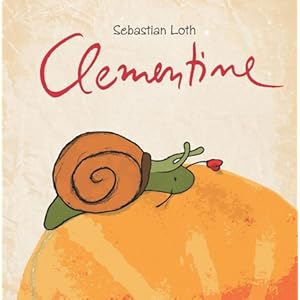
C is also for Clementine by Sebastian Loth and Chih-Yaun Chen, author of Guji-Guji - two books which sound like a lot of fun and which I am adding to my mental wishlist for the boys...  Reviews can be found at Outside In Inside Out.
Guji-Guji by Chen Chih Yuan

"Once upon a time, a very strange egg rolled into Mother Duck’s nest. When a baby crocodile hatched, she thought nothing of it and raised Guji Guji along with the rest of her ducklings… as a duck. Everyone gets on fine until some big bad crocodiles turn up one day. The big crocs make Guji Guji question who he is and want him to place his duck family in danger. What will Guji Guji do? Is he a crocodile? Is he a duck? Will he save his family or side with his species?"

http://www.outsideinworld.org.uk/bookdetail.asp?start=1&textpage=&mainpage=&id=162


Clementine by Sebastian Loth
"Clementine the snail loves everything round—hoops, wheels, balls, balloons and most of all, the moon. She longs to glide gently over the moon’s surface so she makes a daring decision— "I'm going to fly to the moon," she whispered into the night . . ." Her best friend Paul helps her to find an ingenious way to travel to the moon and soon Clementine is setting out on the most amazing journey."  

http://www.outsideinworld.org.uk/bookdetail.asp?start=1&textpage=&mainpage=&id=1360
 If you've read either of these, I'd be happy to hear what you thought of them!

Monday, 19 December 2011

Les éveilleurs by Pauline Alphen - review

One of the perks of my job is being asked to read books I'd otherwise have been very unlikely to come across, and this is one of those... Les éveilleurs, Tome 1: Salicande is a fantasy novel, the first in a series aimed at older children or teenagers, although there is probably enough of interest to adults that it could be successfully sold as a "cross-over" book.